Meme Coin Entry Strategy That Beats FOMO
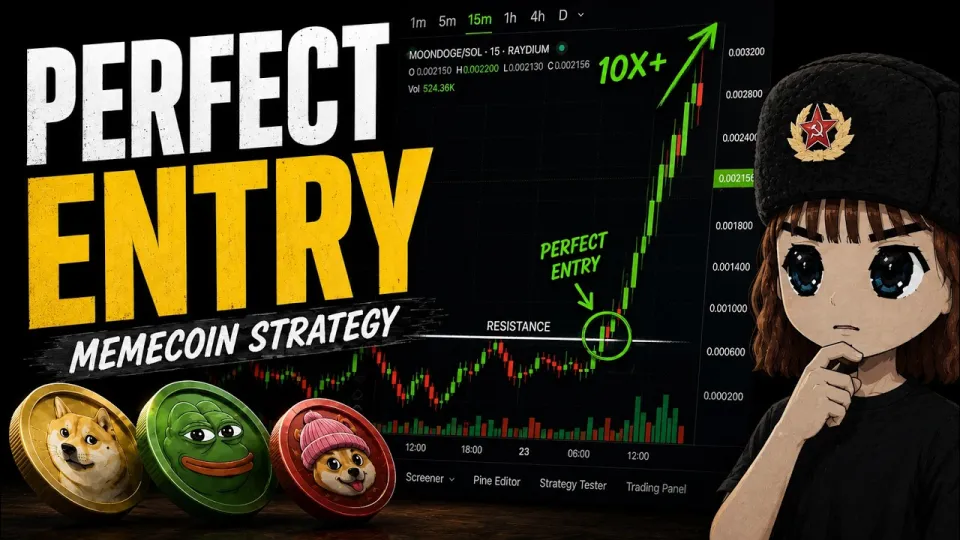
Video: How I Find the PERFECT Entry on Memecoins 📈 (Full Strategy)
Need articles like this for your video? They help promote it on YouTube and Google — order them in the Telegram bot @sat_sit_bot. Articles with your video embedded are written and posted by the bot itself — on popular topical sites (no ads). Free trial — 50 articles.
· based on the channel starwifpump
A meme coin is a highly volatile token driven mostly by attention and liquidity rather than fundamentals, so the entry price — not the coin pick — decides most of the trade's risk-to-reward. The practical approach is to wait for a chart structure with a defined invalidation level, confirm momentum is not already exhausted, and size the position so a full stop-out is survivable. Tools that bundle charting, sniping and position tracking in one terminal make that process repeatable — early access and setup help are available via the Plasma Telegram.
Why meme coin entries fail more often than picks
Most meme coin traders do not lose because they chose the wrong token; they lose because they bought after the move was already visible to everyone. A token can be a genuinely good narrative and still produce a losing trade if the buy happens at the top of a vertical candle, where the nearest support is 40–60% lower. Entry price defines the distance to invalidation, and that distance defines position size, and position size defines whether a normal shakeout ends the account or just the trade.
This is the core argument of the starwifpump breakdown on finding entries: the goal is not to predict every move, it is to build a repeatable process that replaces emotional buying with a checklist. In practice that means three questions before any buy: what is the structure, is momentum fresh or exhausted, and where exactly am I wrong.
The three confirmations before any meme coin buy
A high-quality entry is a setup where structure, momentum and risk all point the same way at the same moment. If one of the three is missing, the trade is a guess.
- Structure. The chart should show a base, a consolidation range or a clean higher-low sequence. A token that has printed one vertical candle with no pause has no structure to lean on, and therefore no logical stop.
- Momentum without exhaustion. Volume and candle bodies should be expanding into the move, not fading at the top of it. Rising price on shrinking volume after a 3–5x run is a distribution pattern, not an entry.
- A defined invalidation level. Before buying, mark the price where the idea is wrong — below the base, below the last higher low, or below the reclaim level. If that level is more than roughly 20–25% away, the entry is too late regardless of how good the narrative looks.
Reading momentum without chasing the pump
Momentum is the difference between a move that is starting and a move that is finishing, and the chart shows it before the price does. Traders who chase green candles are effectively buying the moment when the largest, fastest part of the move has already been delivered to earlier buyers.
Useful momentum checks on a meme coin chart:
- Volume profile into the move: expanding volume with expanding candles suggests participation is still arriving; declining volume into new highs suggests the buyers are already in.
- Distance from the base: if price is already 3–4x off the launch base with no consolidation, the remaining upside is smaller than the downside to the base.
- Candle character: long upper wicks and repeated failed pushes at the same level signal sellers defending a price, which is a warning rather than an entry trigger.
- Time in consolidation: a token that holds a range for hours rather than minutes is building a level that can later act as support for a second leg.
Pullbacks and support levels as entry zones
The best entries in meme coins usually come on the pullback, not on the breakout candle. After an initial impulse, price often retraces into the prior consolidation range, the launch base, or a level that was previously resistance and now acts as support. That retrace gives a tight invalidation level and a much better risk-to-reward than buying the high.
A practical sequence for a pullback entry:
- Mark the base of the impulse and the top of the consolidation that preceded it.
- Wait for price to return into that zone rather than buying the first red candle.
- Look for the first sign of absorption — a wick reclaim, a higher low inside the zone, or volume returning on an up candle.
- Place the invalidation just below the zone, not at an arbitrary percentage.
- If price never returns and runs without you, accept the miss; a missed runner costs nothing.
Avoiding FOMO and the chart signals that say no
Patience is a position, and the ability to skip a trade is the main edge in a market where new tokens launch every minute. FOMO usually appears as a specific feeling — the sense that the move is happening without you — and it almost always arrives at the worst possible price.
Signals that should keep a trader out of a meme coin:
- Price is up several multiples with no consolidation and no higher low.
- Volume is falling while price makes new highs.
- The token has already printed a clear blow-off candle with a long upper wick.
- There is no level nearby that can serve as a stop, meaning the trade has no definable risk.
- The only reason to buy is a social post or a green candle on the timeline.
Planning risk, exits and profit-taking in advance
Risk planning happens before the buy, not after the price moves. Decide the position size from the stop distance, not from how confident the narrative feels: if invalidation is 20% away, the size should be small enough that a full loss is an acceptable cost of doing business. Meme coins can drop 80–90% from a local top, so a stop is a tool, not a formality.
Exits should be mapped in stages. A common structure is to take partial profit into the first strong push, move the stop to breakeven once the trade is meaningfully in profit, and let a smaller remainder run only while the structure holds. Writing those levels down before entry removes the decision from the emotional moment when the chart is moving fast.
Common questions from newer meme coin traders
Newer traders tend to ask the same practical things: which chain is best, which tools filter the noise, and whether a small account is even worth trading. On chains, the mechanics are similar across Solana, Ethereum and newer ecosystems — what changes is liquidity depth, token launch speed and the quality of the terminal you use, so the entry checklist stays the same while the tooling changes. On trackers, filters usually revolve around liquidity, holder count, age of the pair and volume thresholds, and those filters exist to remove tokens that cannot support a real position size.
On account size: a $200 account is not a reason to skip risk planning, it is a reason to be stricter about it. Position sizing and invalidation levels matter more, not less, when the capital is small, and the goal of the first months is a repeatable process rather than a large return. Traders who lost money on meme coins in the past usually lost it to entries without stops, which is exactly the problem a checklist solves.
Useful links
- Plasma Telegram (early access, updates, setup help): https://t.me/+PF-2KHPgQqFiZWJh
- Discord community: https://discord.com/invite/fr6zzYyBxC
- Padre terminal (VIP access): https://trade.padre.gg/rk/star
- Solpump: https://solpump.com/a/STARGOAT
- starwifpump on X: https://x.com/starwifpump
Final thoughts on timing meme coin trades
Entry quality is the part of meme coin trading that a trader actually controls, while the narrative and the launch timing are not. A checklist built around structure, momentum and a defined invalidation level turns a speculative buy into a planned trade with a known cost of being wrong. The starwifpump breakdown makes the same point from the other direction: the coin is only half the battle, and where you enter changes the entire risk-to-reward. Anyone who wants the tooling side of that process can start with the Plasma Telegram for early access and build the checklist before the next trade.
Key takeaways
- Most meme coin losses come from bad timing, not bad coin selection — entry price sets the risk-to-reward of the whole trade.
- A valid setup needs three confirmations: chart structure, momentum that isn't exhaustion, and a defined invalidation level.
- Pullbacks to support and prior consolidation zones give better entries than chasing green candles after a vertical move.
- Every trade needs a pre-planned exit and position size before the buy button is pressed.
- Missing a runner costs nothing; entering without a stop costs the account.
Questions & answers
What is the single most important factor in a meme coin entry?
The distance to the invalidation level. If the level where the trade idea is wrong sits far below the current price, position size has to shrink or the trade should be skipped. Entry price, stop placement and size are one decision, not three.
How do I know a meme coin pump is exhausted rather than just starting?
Watch volume against price. Expanding volume with expanding candles suggests participation is still arriving, while new highs on falling volume after a multi-x run point to distribution. Long upper wicks and repeated failures at the same level are additional warning signs.
Should I buy the breakout or wait for a pullback?
A pullback into the prior consolidation or launch base usually offers a tighter stop and better risk-to-reward than the breakout candle. Waiting costs missed trades occasionally, but chasing costs capital regularly.
Does the strategy change between chains like Solana and newer ecosystems?
The checklist stays the same, but liquidity depth, launch speed and terminal quality differ by chain. Thinner liquidity means smaller size and stricter filters on holders, volume and pair age.
Source: How I Find the PERFECT Entry on Memecoins 📈 (Full Strategy) · Markdown version